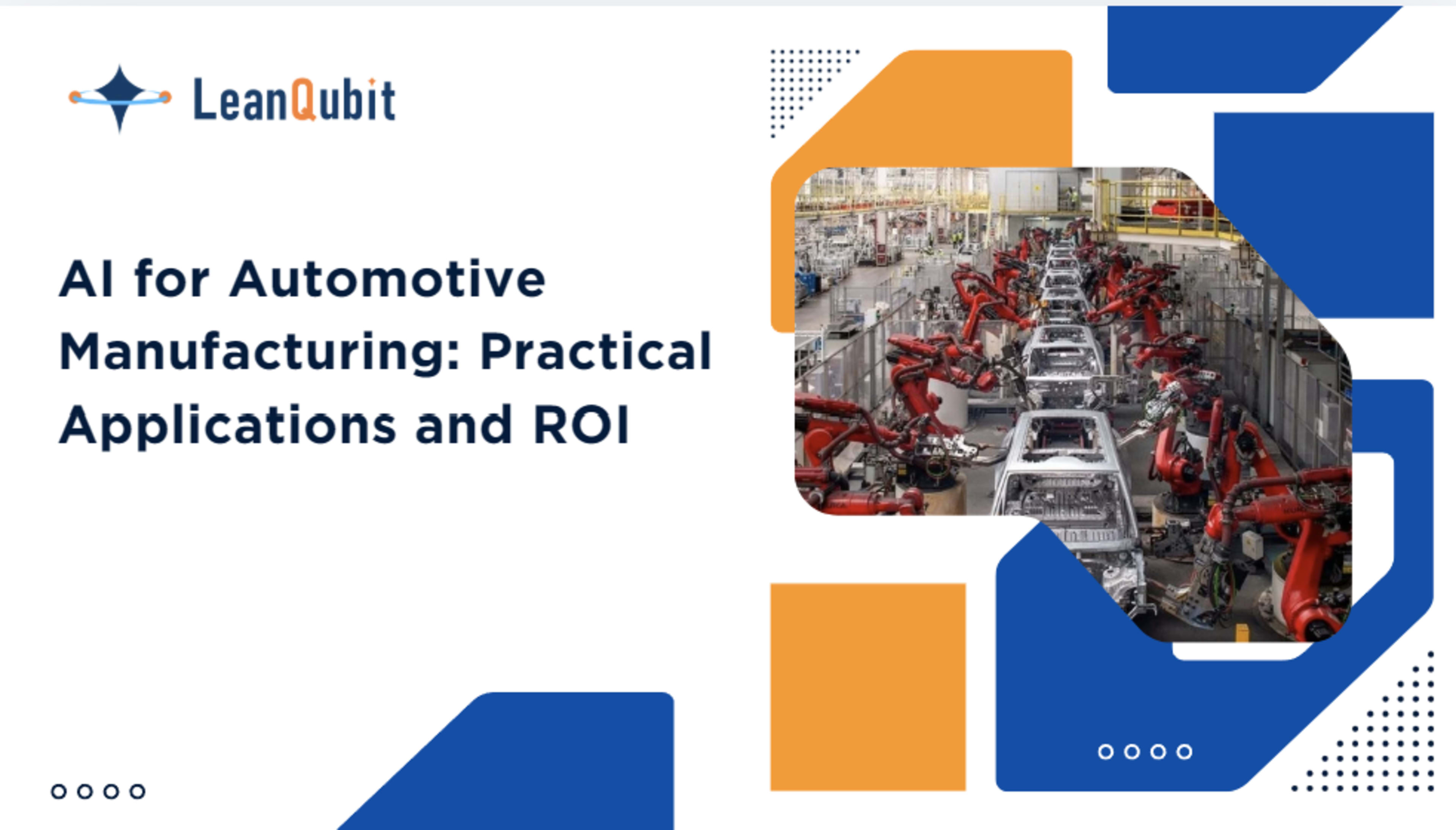
- An idle automotive assembly line costs between $1M-$2.3M per hour — making predictive maintenance ROI in automotive higher and faster than virtually any other sector.
- Automotive quality AI's highest-value application is preventing defects from travelling downstream on a moving assembly line, not just catching them at end-of-line inspection.
- Just-in-time production schedules mean scheduling AI in automotive has tighter tolerances and higher stakes than in batch manufacturing environments.
The automotive case for AI is simpler than most industries: the cost of failure is public knowledge
An idle automotive production line costs between $1 million and $2.3 million per hour. This isn’t a figure that requires a custom analysis — it’s been industry-known for years. Which makes the ROI case for predictive maintenance in automotive unusually simple: prevent one unplanned stoppage per year, and the investment pays for itself regardless of facility size.
What’s changed in 2026 is that this was previously only accessible to Tier 1 and OEM manufacturers with the budgets to fund large-scale enterprise AI programs. It’s now accessible to Tier 2 and Tier 3 suppliers who produce components at scale and face exactly the same downtime cost structure.
Where AI delivers the most in automotive
Stamping and body shop: Stamping dies and welding equipment degrade in patterns that MaintIQ can detect from vibration and cycle-time data weeks before a die crack or weld quality degradation shows up in inspection. Stamping downtime propagates immediately downstream to assembly — prevention has multiplied value.
Paint shop: Environmental control systems (HVAC, humidity, temperature) are critical quality inputs in automotive paint. Failures in paint environmental systems trigger batch rejects that are expensive and visible to customers. Predictive monitoring of paint shop environmental equipment has among the highest quality-cost-avoidance ROI of any automotive application.
Assembly: ProdIQ identifies where assembly OEE losses are actually occurring versus where the team assumes they’re occurring — micro-stoppages that individually look minor but compound across a shift into meaningful throughput loss.
In automotive supply chains, a quality escape from a Tier 2 or Tier 3 supplier that reaches the OEM or the end customer triggers recall liability that can dwarf the supplier’s annual revenue. Quality AI that catches defect patterns early — before parts ship — is not a cost optimisation, it’s existential risk management.
Scheduling AI in just-in-time environments
Automotive supply chains operate on JIT schedules with tolerances measured in hours. FactoPlan applies scheduling optimisation that accounts for real-time capacity (not plan-assumption capacity), material availability, and sequence constraints — enabling suppliers to meet JIT commitments even as their own input variability increases.
Frequently Asked Questions
Almost always with predictive maintenance on their highest-criticality equipment — the machine that, if it stops, stops everything else. Single-asset predictive maintenance pilots have the clearest ROI, fastest deployment, and easiest internal approval path.
Yes — FactoMES and FactoLake include SAP connectors and support standard EDI/API integration with major automotive ERP and MES platforms. OEM-specific integration requirements are handled via custom connector development.
For high-criticality equipment (stamping, welding, body shop), ROI is typically achieved within the first major avoided downtime event — often within 3-6 months of go-live. For facilities with lower downtime frequency, the OEE and maintenance-spend-reduction benefits typically deliver positive ROI within 12 months.
Related: Complete Guide to Manufacturing AI · AI Agents for Maintenance Teams · Industrial AI Implementation Cost